Word Crossy - A crossword game
- 4.2
- Rating
- 5.00M
- Installs
- Free
- Price
 Analysis by App-foxy
Some word games ask me to search a crowded grid, while others make me build answers from a fixed rack of letters. Word Crossy takes a different route: it turns crossword solving into a letter-connecting exercise, with a relaxed pace that works especially well when I want something mentally active but not demanding enough to take over my attention. I found its central appeal in the way a short word can open the path to a longer one, making each puzzle feel like a small chain of discoveries rather than a single question with one obvious answer.
That focus matters because the game is easy to understand without being completely automatic. I can begin with familiar words, test how they fit, and then look at the remaining spaces from a new angle. The result is a casual word game that suits a coffee break, a commute, or a few quiet minutes before bed. It is free to start, rated for Everyone, and developed by WORD CALM, so it is clearly aimed at broad, everyday play rather than a specialist crossword audience.
Why the connecting-word mechanic works
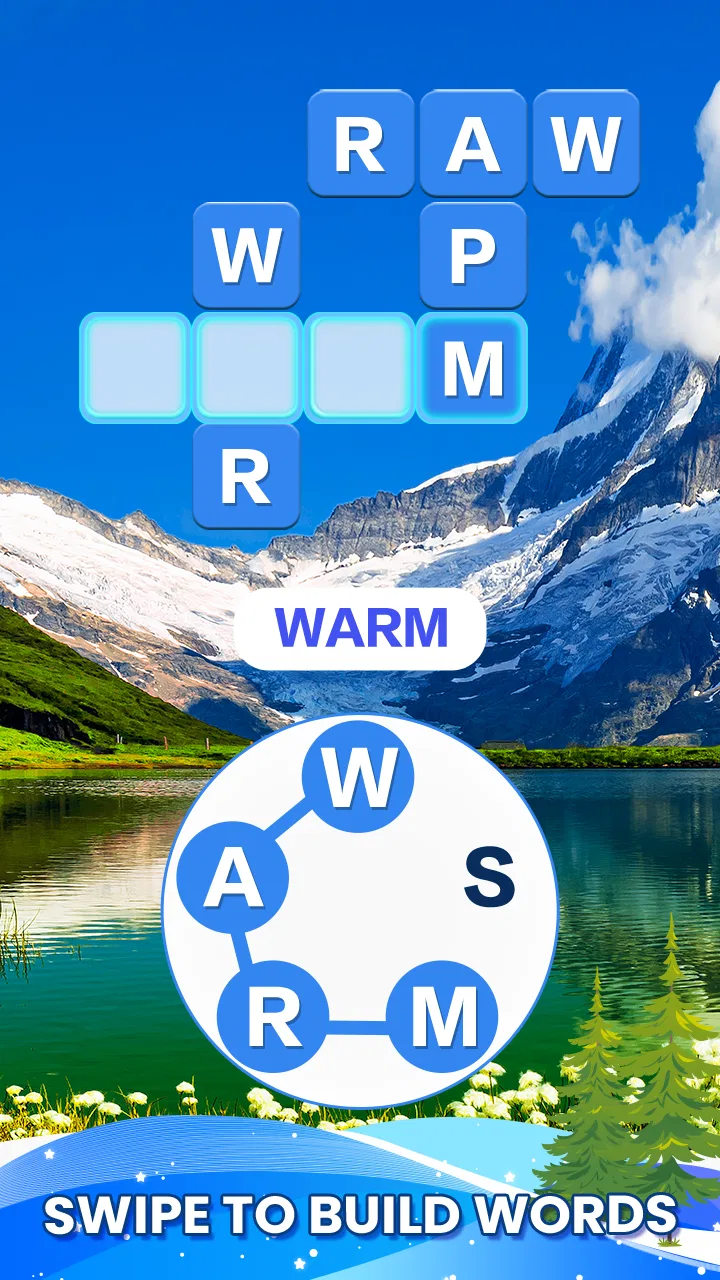
The strongest capability here is the connection between a crossword-style layout and a pool of letters that I have to rearrange mentally. Instead of simply reading a clue and writing an answer, I am constantly switching between two tasks: finding a plausible word and checking whether it belongs in the shape of the puzzle. That second step gives the game its rhythm. A word may look correct in isolation, yet the surrounding spaces can show me that another arrangement is more useful.
You May Also Like

 Blood Strike: 2.5 Anniversary
Blood Strike’s Loadouts Turn Every Drop Into a Tactical Gamble
A close look at Blood Strike’s custom loadouts: how fast access to signature weapons reshapes its battle royale rhythm, rewards preparation, and narrows the gap between fights.

 Pandora - Music & Podcasts
Pandora’s Music Is Easy to Start, but Harder to Recover
Pandora’s strength is its low-effort path from a seed to a station. Its weak spot is how much confidence it asks you to place in connection, setup, and quiet recovery.

 8 Ball Pool
 Is Built on Rivalries, Rematches, and Routine
A close look at the rivalries, rematches, shared routines, and unanswered safety questions that turn a quick pool match into a persistent mobile community.

 Samsung Music
’s Quiet Strength Is Playing What You Already Own
Its reach comes less from spectacle than from dependable access to a personal library. That simplicity is both the app’s strongest retention engine and its ceiling.

 AccuWeather: Weather Radar
AccuWeather Review: A Quick, Clear Forecast for Everyday Decisions
For everyday plans, the best forecast is the one you can understand quickly. AccuWeather makes rain timing, radar, and local conditions easy to act on, with a few trade-offs.

 Hill Climb Racing
Why Hill Climb Racing Still Turns Crashes Into One More Run
A tiny car, a bumpy hill and one more upgrade: Hill Climb Racing keeps resurfacing because its simple chaos makes every near-miss feel personal.
More From Our News Desk



In practice, this creates a gentle form of brain training through word association. I am not solving a traditional newspaper crossword with long clues, references, and obscure definitions. I am working with visible letter possibilities and the structure of the board. That makes the game approachable for players who enjoy vocabulary challenges but do not want to spend several minutes interpreting one difficult clue.
The capability also gives the game a useful middle ground between a crossword and an anagram puzzle. A pure anagram game can become a hunt for every possible word in a letter set, while a traditional crossword often depends heavily on clue knowledge. Word Crossy keeps the letter manipulation but adds a destination: the crossword arrangement tells me where my thinking should go. The board acts as a second clue, which is the detail that makes the experience more satisfying than simply mixing letters at random.
I particularly like how this design rewards flexible thinking. If I become attached to one possible answer, the open spaces encourage me to reconsider it. A short word can be useful because it fills an immediate gap, but it can also reveal a pattern that points toward another answer. This makes progress feel earned even when the vocabulary itself is familiar.
How a typical puzzle feels in my hands
I usually start by scanning the available letters for the shortest, most obvious combinations. That first pass is not about solving everything; it is about learning the shape of the puzzle. Once I place a word, I look at which spaces remain and whether the new arrangement suggests a prefix, ending, or repeated letter pattern. This simple routine is more reliable than trying to guess the longest answer immediately.
The game is at its best when I allow myself to move between quick guesses and slower inspection. Some words appear because the letter set makes them obvious. Others surface only after I notice that the crossword layout needs a particular length or crossing. When I get stuck, I do not always need a completely new vocabulary idea. Often, I need to stop looking at the letters as a loose group and start treating the empty spaces as a visual pattern.
That is one of the more useful habits the game encourages: separating recognition from confirmation. I may recognize a possible word, but the puzzle still asks whether it fits the available arrangement. This keeps the experience from becoming a simple memory test. It is closer to a small exercise in filtering possibilities, which is why I find it more engaging than endlessly swiping through random combinations.
The best way to play is in short sessions. I can make meaningful progress without committing to a long sitting, and the low-pressure format makes it easy to pause when my attention shifts. It also works well when I want something quieter than an action game. There is no need to learn a complicated control scheme, and the basic interaction becomes comfortable quickly.
A realistic everyday use
My favorite use case is a ten-minute waiting period: sitting in a reception area, waiting for food, or taking a break between tasks. I can open a puzzle, solve a few connections, and stop without feeling that I have abandoned a large campaign. If I return later, the visual state of the crossword gives me an immediate reminder of what I was considering.
It also fits a low-energy evening better than many competitive games. When I am tired, I may not want timed matches or demanding strategy, but I still enjoy the feeling of making progress. The word-and-grid format gives me just enough concentration to stay occupied without requiring the intensity of a full puzzle session.
Parents looking for an accessible word activity may also appreciate the Everyone rating, although the actual enjoyment will depend on the player’s vocabulary and patience. Younger players can approach it as a letter game, while older players may enjoy the pattern recognition. I would still treat it as a personal play choice rather than assuming the age rating guarantees that every puzzle will suit every child.
Where it differs from familiar alternatives
Compared with a conventional crossword app, Word Crossy feels less dependent on outside knowledge. Traditional crosswords can be rewarding when I enjoy clues about history, language, culture, or wordplay, but they can also stop me because one missing fact blocks an entire section. Here, the letters and layout carry more of the burden. That makes the experience friendlier when I want vocabulary practice without a reference-heavy challenge.
Compared with a basic anagram game, it provides better direction. An anagram format may offer a letter group and expect me to discover every accepted word, which can feel open-ended. The crossword structure gives my search a purpose. I am not merely asking what words can be made; I am asking which word helps complete this particular arrangement.
On the other hand, players who love strict clue accuracy may find it less intellectually rich than a serious crossword. The appeal is not deep cryptic interpretation. It is the steady movement from letters to placement. If I want a hard vocabulary examination or a daily puzzle with a strong editorial voice, another crossword style may be a better choice.
Using the mechanic well without making it frustrating
My first practical tip is to avoid spending too long on the most tempting long word. Long answers feel productive, but they can distract from small connecting words that reveal the board’s structure. I get better results by clearing easy possibilities first, then returning to the longer combinations once the pattern becomes clearer.
A second useful approach is to read the empty spaces as groups rather than as isolated boxes. If several spaces appear to form a familiar ending, I can test words that share that ending instead of restarting from the entire letter pool. This reduces mental clutter and makes the puzzle feel more manageable, especially when several options use similar letters.
I also recommend treating mistakes as information. An unsuccessful attempt can show that I am approaching the letter set from the wrong direction. Rather than repeatedly forcing the same answer, I look for a shorter word, a different starting letter, or a crossing that I have overlooked. This mindset keeps the game from turning into a frustrating battle against one stubborn guess.
Another trade-off is how much help I want to use. A hint can be useful when I am genuinely stuck, but relying on assistance too quickly removes the most satisfying part of the mechanic: the moment when the board suddenly makes sense. I prefer to pause, change my visual focus, and try a few alternate combinations before asking for help. That preserves the brain-training value while still keeping the game accessible.
The game’s free price makes trying it straightforward, but optional purchases range from $0.99 to $99.99 per item. That wide range is worth remembering before spending. I would approach purchases as convenience rather than a requirement for enjoying the basic word challenge. Anyone who is easily tempted by boosts or similar extras should decide on a personal limit before playing, particularly because short, repeatable puzzles make it easy to return often.
The large audience suggests that the format has broad appeal: the game has passed five million installs, with an average rating of 4.2 from around 293 thousand ratings and roughly 57 thousand written reviews. Those figures do not replace personal taste, but they do match my impression that the game is designed for accessible, repeatable sessions rather than a narrow group of expert word solvers.
Small limitations that affect the decision
The same simplicity that makes the game welcoming can also make it feel repetitive. If I want dramatic progression, a strong story, or a changing set of rules, this is not where I would look. The core loop remains focused on connecting and arranging words, so the enjoyment depends on whether I like refining the same basic skill across many puzzles.
It may also disappoint players who prefer complete control over difficulty. The experience is approachable, but a player seeking extremely demanding wordplay may find the challenge too gentle at times. I would choose a more advanced crossword or a specialized vocabulary game when I want dense clues, unusual definitions, or a serious test of expert knowledge.
There is also a psychological trade-off in the short-session design. Because a puzzle can be picked up so easily, it can become a default filler whenever I have a spare moment. That is convenient, but it means the game works best when I use it intentionally: a quick mental break, not an automatic response to every idle minute.
The app has been available since September 15, 2017, and the current version is 2.8.9. It supports devices running Android 7.0 or later. For someone using an older device, checking compatibility before planning to play is sensible. For most people with a supported phone, the practical question is less about learning the controls and more about whether the relaxed word-solving loop matches their preferred kind of challenge.
Who will get the most from it?
I would recommend Word Crossy to someone who likes word games but wants clearer guidance than a free-form anagram board provides. It is especially suitable for players who enjoy spotting patterns, testing familiar words, and making gradual progress without a timer dominating every move. It is also a good fit for casual players who want a game that can be played in short bursts and resumed without a long explanation.
It can be useful for vocabulary practice in an informal sense, although I would not treat it as a structured language course. The game encourages me to notice spelling patterns and think of related combinations, but its main purpose is entertainment. Someone learning a language may enjoy it as a supplementary exercise, while a learner who needs definitions, pronunciation, or organized lessons should choose a dedicated language app instead.
I would skip it if my priority is competitive multiplayer, a narrative campaign, or highly specialized crossword difficulty. I would also look elsewhere if I dislike optional purchase prompts in free games, even though the basic format is easy to understand without spending. Players who need a strict daily routine, detailed explanations for every answer, or a large variety of puzzle types may feel constrained by the focused design.
For me, the deciding strength is not simply that it contains words. It is that the crossword layout gives anagram-like thinking a useful direction. I can begin with a guess, use the board to test it, and let each confirmed connection narrow the next choice. That feedback loop is the real reason to install it: it turns a small collection of letters into a visual problem that feels calm, readable, and rewarding.
WORD CALM has kept the concept focused, and that focus is both the game’s identity and its main limitation. I would recommend the free version to anyone wanting a friendly word puzzle for spare moments, provided they are comfortable with a repeatable format and mindful of optional purchases. It will not replace a demanding newspaper crossword or a full language-learning tool, but as an approachable crossword game built around connecting letters, it earns a place on my casual-play list.
FAQs for Word Crossy - A crossword game
01What is Word Crossy and how does it work?
Word Crossy is a crossword puzzle game designed to enhance vocabulary and spelling skills. Players are presented with a grid of letters and must swipe to form words, filling in the crossword puzzle. The game offers various levels of difficulty, ensuring both beginners and seasoned word enthusiasts find it engaging.
02Is Word Crossy free to play, or are there in-app purchases?
Word Crossy is free to download and play, but it offers in-app purchases. These purchases can include hints, additional levels, or special features that enhance gameplay. While the game can be enjoyed without spending money, buying these extras can help progress through challenging levels more easily.
03What platforms is Word Crossy available on?
Word Crossy is available on both Android and iOS platforms. It can be downloaded from the Google Play Store for Android devices and the Apple App Store for iOS devices. Ensure your device meets the necessary system requirements for optimal performance and gameplay.
04Does Word Crossy require an internet connection to play?
Word Crossy can be played offline, making it a great option for entertainment without needing a constant internet connection. However, some features, such as daily challenges or updates, may require an internet connection to access the latest content and synchronize progress across devices.
05Are there any ads in Word Crossy, and can they be removed?
Word Crossy does include ads, which help keep the game free for users. These ads can occasionally interrupt gameplay, but players have the option to remove them by purchasing an ad-free version or making certain in-app purchases. This enhances the overall gaming experience by providing uninterrupted play.
Pros
- Engaging word puzzles for brain exercise.
- Visually appealing with soothing themes.
- Daily challenges keep gameplay fresh.
- Offline mode available for travel play.
- Adaptive difficulty for all skill levels.
Cons
- Ads can be intrusive between levels.
- Limited hints without in-app purchases.
- Some levels may feel repetitive.
- Occasional bugs disrupt gameplay.
- Requires internet for updates and events.

Word Crossy - A crossword game
Gallery